1. Beyond the Broken Annual Performance Review
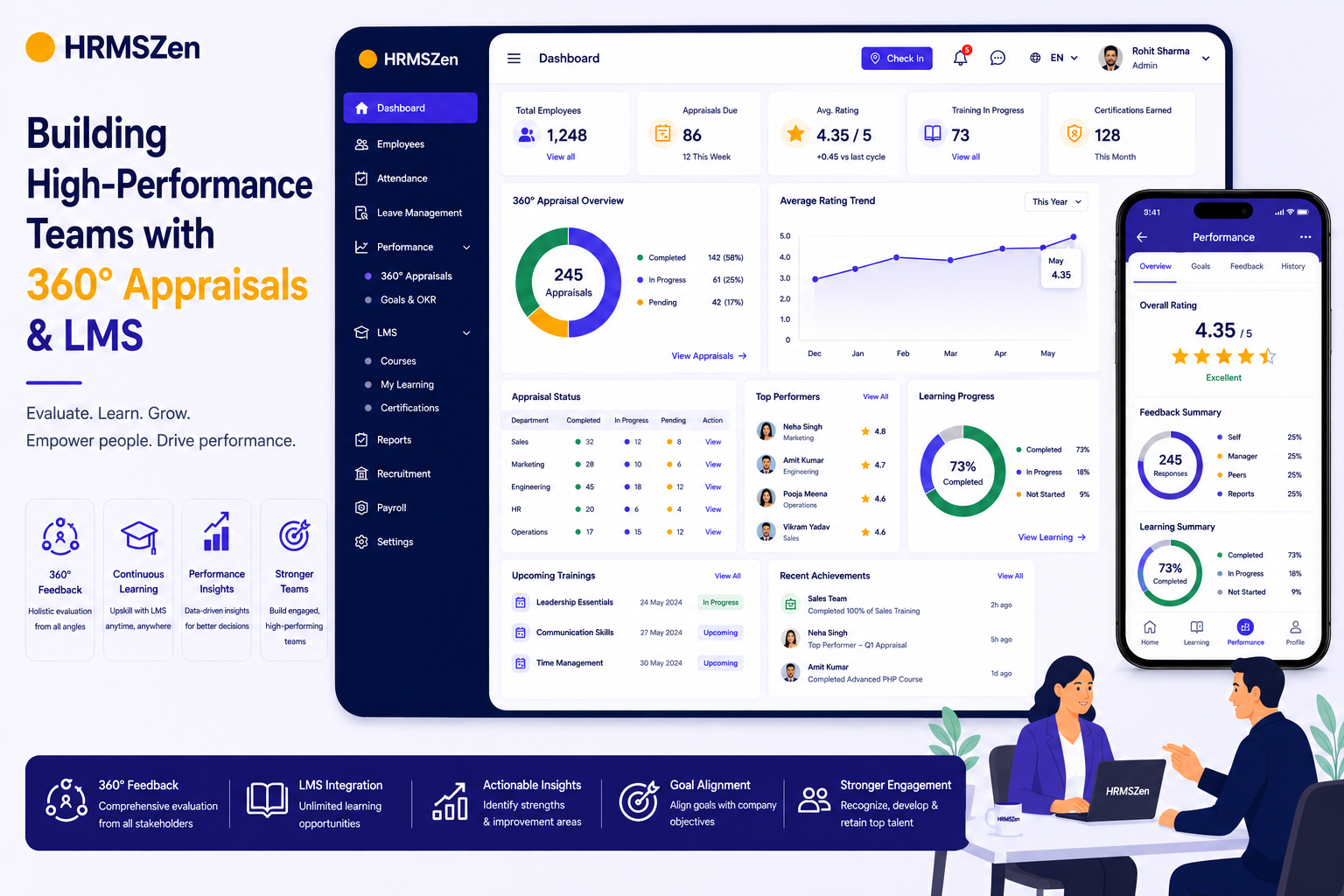
Traditional once-a-year performance reviews are widely recognized as ineffective, stress-inducing, and backward-looking. High-performing organizations require continuous performance enablement—aligning individual goals with company strategy, gathering multi-source 360-degree feedback, and supporting employees with target training courses.
By integrating Performance Appraisals (KPI/KRA management) with a Learning Management System (LMS) inside a unified HRMS, businesses foster a culture of continuous learning, employee growth, and measurable performance results.
2. Aligning Corporate Goals with OKRs & KPIs
High performance begins with clarity of purpose. HRMS performance modules enable transparent goal setting across all organizational levels:
- Goal Cascading: Connect overarching company revenue and product milestones down to department Key Result Areas (KRAs) and individual Key Performance Indicators (KPIs).
- Measurable Progress Metrics: Track quantitative targets updated periodically throughout the quarter.
- Continuous Check-Ins: Facilitate 1-on-1 monthly manager check-ins to adjust goals, remove blockers, and record ongoing coaching notes.
3. 360-Degree Multi-Rater Feedback Cycles
Single-manager appraisals often suffer from unconscious bias. A 360-degree appraisal model gathers comprehensive evaluation inputs from multiple perspectives:
- Self-Appraisals: Employees reflect on their achievements, key challenges, career aspirations, and areas for development.
- Peer Evaluations: Teammates evaluate collaboration, communication skills, leadership potential, and technical execution.
- Direct Report Upward Feedback: Subordinates evaluate manager leadership effectiveness, team support, and decision-making clarity.
- Manager Final Ratings: Supervisors synthesize multi-rater inputs into balanced performance ratings and merit salary increase recommendations.
4. Integrated LMS: Skill Gap Analysis & Target Training
Identifying performance gaps is only effective if your organization provides immediate pathways for skill improvement. The built-in LMS module bridges performance reviews with continuous learning:
- Automated Skill Gap Mapping: When an appraisal identifies weaknesses in specific skill categories, the HRMS automatically recommends target training courses.
- Digital Course Content & Quizzes: Upload video modules, PDF training guides, and interactive knowledge quizzes accessible on desktop and mobile.
- Certificate Tracking & Compliance: Track mandatory regulatory compliance certifications with automatic renewal reminders.
5. Bell Curve Normalization & Compensation Planning
For mid-sized and enterprise organizations, the HRMS provides appraisal rating normalization tools to prevent rating inflation across departments, linking performance outputs directly to annual bonus pools and promotion eligibility ladders.
6. Conclusion: Cultivating an Environment of Growth
Unifying goal tracking, multi-rater feedback, and continuous learning inside your HRMS transforms performance evaluation from a tedious HR chore into a competitive strategic advantage.